Aspects of Stress
When our adrenal glands function optimally, they produce adequate amounts of cortisol and DHEA to help us cope with stress and power us through the day.
Whether stress comes from our outside environment, like traffic and crowds, or from within, like the anxiety we experience from family or job issues, healthy secretion of cortisol and DHEA from the adrenal glands help us adapt to these situations.
The human stress response is based on two factors ‐ one, the actual stressors (the events and circumstances that impact our life), and two, how we cope with these stressors (how we interpret and respond to them).
Hopefully, we can exert:
- Control over the stressors by identifying what circumstances can be changed for the better, although these are often the stressors over which we often have the least control.
- Control over the coping response, including behavioral responses and biological responses (interpretation, language, empathy, understanding, medical treatment, diet, nutrition, movement/physical activity, sleep habits). These are the stressors over which we often have the most control.
How the biomarkers we measure impact your health
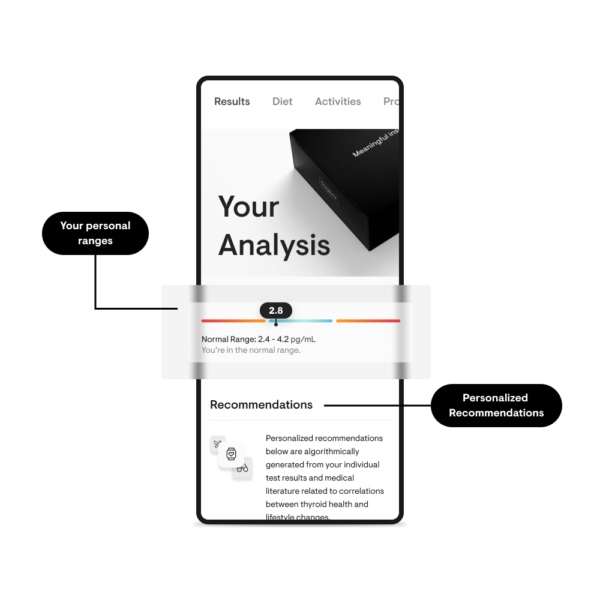
Testing for the levels of cortisol and DHEA in your body reveals the pattern of these two key measures of our stress response ‐ stressors and coping. The degree to which your cortisol and DHEA levels fall outside the normal range can be used to guide dietary, exercise, lifestyle, and supplement recommendations.
Cortisol and DHEA
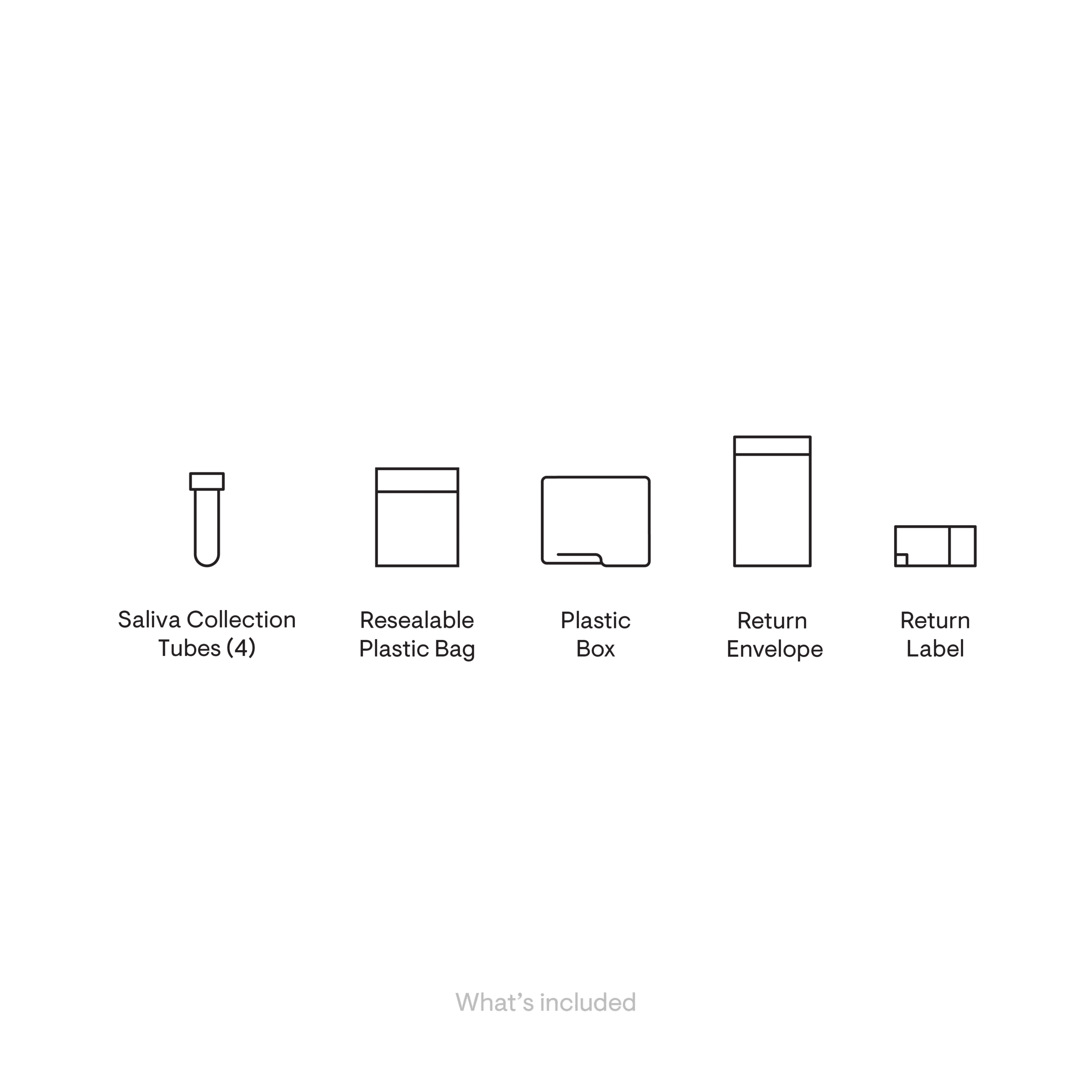
Cortisol has wide-ranging effects in the body: it interacts with the reproductive, immune, and endocrine systems. Cortisol, as part of the stress response, prepares the body for a “fight-or-flight” response by suppressing the production and release of other hormones, such as DHEA and thyroid hormones. Normally, cortisol levels have a rhythm of ebbing and flowing during the day, and your cortisol level is highest in the morning and lowest at night. Thorne’s Stress Test takes four saliva samples at four time-points during the day to capture your true cortisol rhythm. Stressors, such as those present in your work or home life, often trigger a release of cortisol, either acutely or persistently, and can affect your health in a variety of negative ways.
DHEA, although produced in the adrenal glands, is also produced in smaller amounts in your brain and sex organs. DHEA is a precursor molecule for testosterone and estrogen synthesis, and, thus, it has many other effects in the body. A person’s DHEA production generally declines with age.
Metabolically in the body, cortisol and DHEA are antagonistic to each other. The hormones exist in an ever-changing “tug-of-war” with each other, and when one is elevated, the other is usually lower.
The Science
- Gavrieli A, Yannakoulia M, Fragopoulou E, et al. Caffeinated coffee does not acutely affect energy intake, appetite, or inflammation but prevents serum cortisol concentrations from falling in healthy men. J Nutr 2011;141(4):703-707.
- Ohlsson C, Nethander M, Kindmark A, et al. Low serum DHEAS predicts increased fracture risk in older men: The MrOS Sweden Study. J Bone Miner Res 2017;32(8):1607-1614.
- Ghebre M, Hart D, Hakim A, et al. Association between DHEAS and bone loss in postmenopausal women: a 15-year longitudinal population-based study. Calcif Tissue Int 2011;89(4):295-302.
- Field A, Colditz G, Willett W, et al. The relation of smoking, age, relative weight, and dietary intake to serum adrenal steroids, sex hormones, and sex hormone-binding globulin in middle-aged men. J Clin Endocrinol Metab 1994;79(5):1310-1316.
- Erdemir I, Kizilet A, Bozdogan T. Effects of exercise on circadian rhythms of cortisol. Internat J Sports Sci 2013;3(3):68-73.
- Hill E, Zach E, Battaglini C, et al. Exercise and circulating cortisol levels: the intensity threshold effect. J Endocrinol Invest 2008;31(7):587-591.
- Floyd K, Mikkelson A, Tafoya M, et al. Human affection exchange: XIII. Affectionate communication accelerates neuroendocrine stress recovery. Health Commun 2007;22(2):123-132.
- Sumioka H, Nakae A, Kanai R, Ishiguro H. Huggable communication medium decreases cortisol levels. Sci Rep 2013;3:3034.
- Pascoe M, Thompson D, Ski C. Yoga, mindfulness-based stress reduction and stress-related physiological measures: A meta-analysis. Psychoneuroendocrinology 2017;86:152-168.
- Pascoe M, Bauer I. A systematic review of randomised control trials on the effects of yoga on stress measures and mood. J Psych Res 2015;68:270-282.
- Zschucke E, Renneberg B, Dimeo F, et al. The stress-buffering effect of acute exercise: evidence for HPA axis negative feedback. Psychoneuroendocrinology 2015;51:414-425.
- Chatterjee S, Mondal S. Effect of regular yogic training on growth hormone and dehydroepiandrosterone sulfate as an endocrine marker. Evid Based Complement Alternat Med 2014;2014:240581. doi: 10.1155/2014/240581
- Lennartsson A, Theorell T, Rockwood A, et al. Perceived stress at work is associated with lower levels of DHEA-S. PLoS One 2013;8(8):e72460. doi: 10.1371/journal.pone.0072460. eCollection 2013.